

AI outputs are exciting. Share the first tests with your team and everyone is impressed. I’ve experienced that multiple times now, with every new model update.
Making it scale across a team, a company, or a season that’s where the hard work begins.
The question is how do you make it follow brand consistency without burying your team in an endless maze of prompts. How do you turn AI from a tool into a workflow.
And honestly, this is nothing new. We’ve been here before with 3D, and before that with setting up the Adobe suite. We all want to believe we can skip the structure and go wild. And to some extent you can. AI turns every detailed instruction, design direction, or reference image into something beautiful.
The question is how do you make it follow brand consistency without burying your team in an endless maze of prompts. How do you turn AI from a tool into a workflow.
Manual prompting alone breaks
Prompting feels productive because the first results are surprising.
The trap is that it doesn’t scale. As soon as ideas become product it need refinement and control. Doing that with manual prompting can take hours and makes you want to pull your hair out.
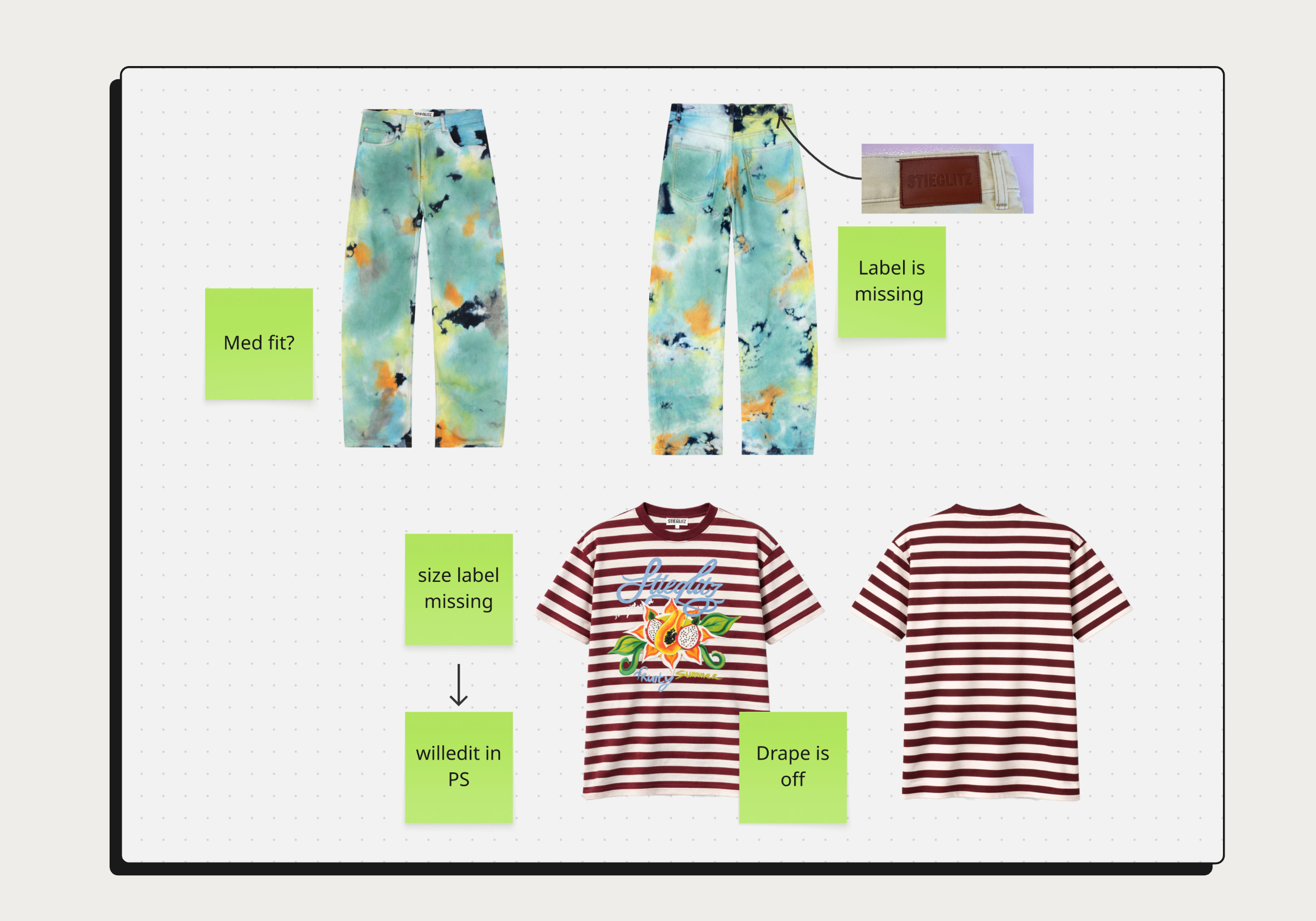
Multiply that across a season and you don’t have a workflow and you have a very expensive digital photoshoot with an unpredictable timeline and unpredictable outcomes.
After running multiple rounds of ecom AI delivery for brands, we kept hitting the same wall. Not every brand had good structured input. No fit library, no material library, no label references. And the design input - usually an Illustrator file - made things worse. Those outlines were never set up as AI input. They’re artist impressions with drawn-on shadows and decorative details that confuse the model and distort the whole process.
What we realised is that AI needs structured data to work consistently. We started to call it Brand DNA. A mix of design library, dev library and brand guidelines, structured for AI use.
A Brand DNA layer fixes this by removing the part of the process that currently lives inside someone’s head. The brand becomes structured input, not a prompt users have to remember.

How we set up the Brand DNA
The funny thing, in most cases the Brand DNA already exists. It’s just not structured yet.
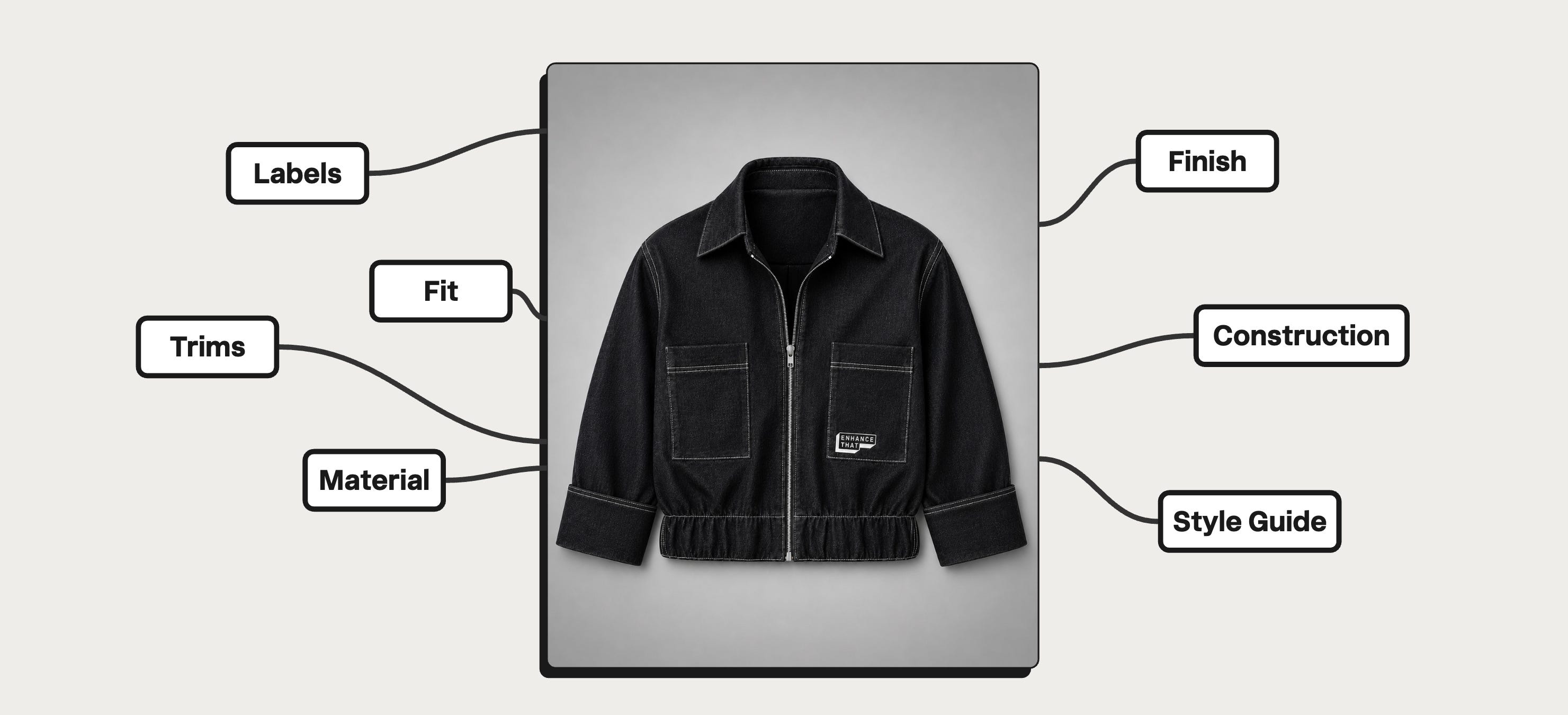
Almost every fashion brand is sitting on the main input layer they need. Their ecom images. Thousands of frames, shot to a tight standard, season after season. The lighting, the framing, the labels, the finishing, the fit. The small consistencies that make a product read, instantly, as yours.
Instead of treating it as output, we use it as input to build the Brand DNA structure.
We’re currently building this for one brand, Stieglitz. It’s early work, but what we’re learning is already changing how we think about AI input. We look at their existing imagery, identify the repeatable patterns - the ones a human eye recognises without thinking. The ones a model needs spelled out and wire them in as the input layer for their AI workflow. We’re now turning this process into a repeatable workflow so we can bring it to every brand we work with.
Consistent Brand DNA input gives us the data to generate consistent output. It’s not perfect yet, but with every model improvement, including the latest OpenAI image generation, the dataset becomes more valuable.
The point is not to make AI generate one good image. The point is to make it generate the hundredth one without anyone starting from zero.
That’s the difference between a tool and a workflow. A tool gives you an output. A workflow gives you consistency.
Build the structured input layer first. Then plug in whatever AI tool you like, we have no stake in any of them. We work with what you’ve got.